

AEO, GEO and your website in AI search
Ranking used to be the goal. Now an AI reads your website and decides whether to mention you at all. Here's what that changes, and what to fix first.
· By Tural Jumshud · 8 min read
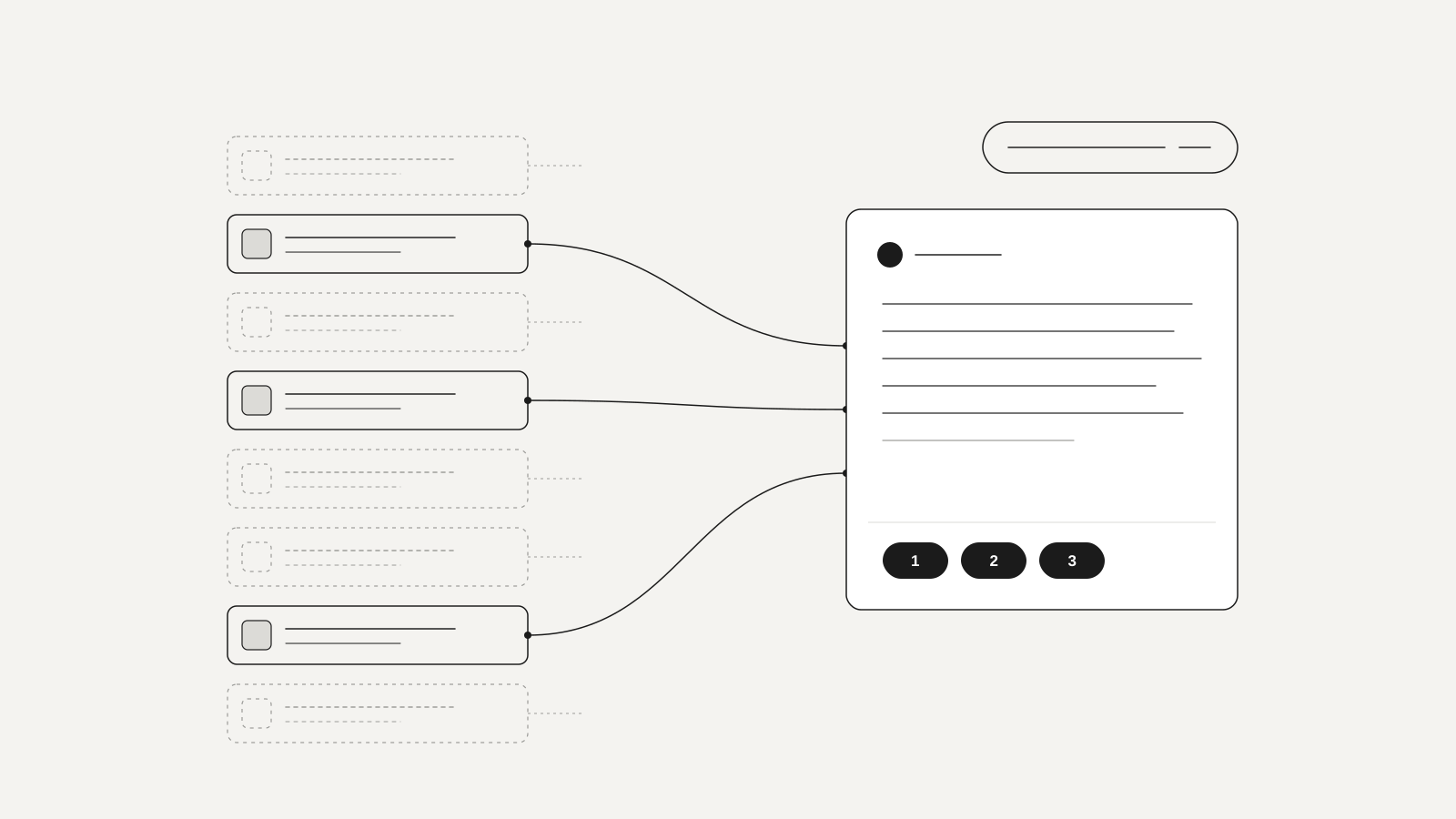
Think about the last time you looked for a supplier, a tool or a studio. There's a good chance you didn't open ten tabs. You asked ChatGPT, Perplexity or Gemini, read a paragraph, and maybe clicked one of the two or three names it gave you.
Your customers do the same. An AI answer doesn't hand out ten blue links and let people choose. It picks a handful of sources and summarises them, and everyone else simply isn't in the conversation.
So being findable is no longer enough. Your website now has to be easy for a machine to read, understand and quote. Part of that is a content job, but a lot of it is a design and build job, which is why we think about it on every site we make.
What's actually changed
A few numbers show why this stopped being a trend to watch:
- The audience is huge. OpenAI said in early 2026 that ChatGPT had passed 900 million weekly users. That's one assistant, before you count Gemini, Perplexity, Copilot and Claude.
- The top spot pays less. Ahrefs studied 300,000 keywords and found that when Google shows an AI Overview, the number-one result gets about 58% fewer clicks than it would without one.
- It's cause, not coincidence. In a randomised experiment in early 2026, researchers from the Indian School of Business and Carnegie Mellon hid AI Overviews from some searchers and not others. Seeing the overview cut clicks to websites by roughly 40%.
- Being cited still pays. Seer Interactive found that brands named inside an AI Overview earn clearly higher click-through than brands left out.
That last point is the whole story. AI search doesn't remove the opportunity. It concentrates it on the few names the AI chooses to mention.
AI doesn't list ten results. It names two or three. The work is making sure you're one of them.
AEO and GEO, in plain words
You'll see two acronyms in every article on this. They overlap, but it helps to separate them.
Answer Engine Optimisation (AEO) is about making your pages easy to lift a direct answer from. A clear question, a clear answer near the top, then the detail. FAQ sections, plain headings and structured data all help an assistant find the sentence that answers the question.
Generative Engine Optimisation (GEO) is about your name coming up when an AI combines several sources into one answer, especially for questions like "who's good at…" or "what's the best tool for…". That depends less on any single page and more on being described consistently, credibly and specifically across the web.
Put simply: AEO gets your page quoted. GEO gets your business named. You want both.
SEO isn't dead. It's the floor.
It's tempting to read all this as "forget Google". Don't. AI assistants don't invent their sources. Many of them search the web live, through Bing, Google or their own crawlers, and then read what comes back. If your site is slow, hard to crawl or unclear about what it is, it never makes it into that pile.
So the fundamentals still decide whether you're in the running:
- Crawlable. Real HTML, sensible URLs, a sitemap, nothing important hidden behind scripts or logins.
- Fast on a phone. Light images, no layout jumps, a quick first load.
- Clearly structured. One H1, honest headings, descriptive titles and meta descriptions, internal links that make sense.
- Trusted. Other sites linking to you and talking about you, reviews, a real address and real people.
- Pleasant to use. Accessible, readable and easy to navigate, because people still click through to check.
None of that is new. What's new is that it's now the minimum, not the finish line.
What gets a website quoted by AI
This is what we pay attention to when we design and build a site with AI search in mind. Most of it is cheap to get right at the start and annoying to retrofit later.
-
Say who you are, the same way, everywhere
An assistant has to be confident it knows what your business is before it recommends you. If your homepage says "digital agency", LinkedIn says "brand consultancy" and a directory lists an old name, that confidence drops. Pick one name, one sentence about what you do and one location, and use them on your site, your social profiles and every listing.
-
Put the answer first
Write each important page so its first paragraph answers the question it exists for. "We design and build websites for SaaS companies in Europe" beats three paragraphs of mood-setting. Then add the detail, under headings that read like the questions people actually ask.
-
Be specific, not general
"Web design" is a crowded answer. "Websites for physiotherapy clinics that need online booking" is a findable one. A page per real service, industry or use case gives an AI something precise to match a precise question to.
-
Show evidence, not adjectives
Case studies with real numbers, named clients where you're allowed, screenshots of the actual work, author pages with real experience. Assistants lean on signals of expertise and trust, and so do the people who click through to check you afterwards.
-
Keep text as text
A headline baked into an image, a price list in a PDF, a key claim that only appears after an animation runs: a person sees them, a crawler might not. Keep every important word in the HTML, write proper alt text, and add captions or transcripts to video.
-
Add structured data
Schema markup tells machines what's on a page without them having to guess: this is an organisation, here's its address, this is an article, written by this person, on this date. It's invisible to visitors and takes an afternoon to add properly.
-
Let the right crawlers in
Plenty of sites turn AI bots away without knowing it. Some hosting and security providers now block AI crawlers by default, and robots.txt files get copied from old templates. Decide on purpose. On this site, robots.txt names the main AI crawlers and lets them in, and an llms.txt file gives assistants a plain summary of who we are and what we do.
-
Get talked about elsewhere
Generative answers are built from many sources, so your own site is only part of the picture. Reviews that mention specific results, interviews, guest articles, the right directory listings and original work others reference are what make a model treat you as a known name rather than a guess.
-
Keep it current
Show dates on articles and case studies, and actually update your most important pages. An about page that still talks about 2022 tells both people and machines that nobody's home.
A site that's easy for an AI to read is almost always a site that's easier for people to read too.
A 20-minute check you can do this week
- Ask ChatGPT, Perplexity and Gemini the question you most want to be the answer to. Note who they name and which pages they link.
- Ask each one "What does [your company] do?" If the answer is vague or wrong, your positioning isn't clear enough online.
- Open your homepage and read only the first two sentences. Do they say what you do, for whom, and where?
- Open yourdomain.com/robots.txt and your hosting dashboard's bot settings, and check nothing is blocking the AI crawlers you want.
- Compare your business name, description and location on your site, LinkedIn, Instagram and Google Business Profile. Fix anything that doesn't match.
The upside
We don't think this is bad news. The work that makes a site legible to AI is the same work that makes it better for people: clearer messaging, honest evidence, faster pages, and content that answers real questions. The teams that do it now will be the names assistants keep repeating, because they'll have been saying the same clear thing in the same places for the longest.
It's also why the way we work matters here. At zunidesign the person who designs your site also writes its code, so structure, speed, semantic HTML and schema aren't a bolt-on at the end. They're in the build from the first commit, alongside the design you approved. If that's what you need, have a look at our website service.
FAQs
What's the difference between AEO and GEO?
AEO makes a page easy for an AI to lift a direct answer from. GEO makes your business one of the names an AI mentions when it combines several sources. AEO gets your page quoted; GEO gets your business named.
Is AEO or GEO replacing SEO?
No. Many AI assistants search the web before they answer, so a site that's slow or hard to crawl is less likely to be read at all. SEO is the foundation; AEO and GEO build on it.
How long does it take to show up in AI answers?
Fixes to your own site, like clearer copy, structure and schema, can be picked up within weeks by assistants that search live. Being named consistently across the wider web usually takes months, the same way a reputation always has.
Do I need a new website for this?
Not necessarily. Many sites need clearer copy, structured data and a few new pages rather than a rebuild. If yours is very slow, built mostly from images, or hard to edit, a rebuild can be the faster route.
Can anyone guarantee my business will be mentioned by ChatGPT?
No one honestly can. AI answers vary by question, person and day. What you can control is how clear, credible and easy to read your business is, which is what the assistants rely on.
Sources
- OpenAI, ChatGPT weekly users, February 2026, as reported by eWEEK
- Ahrefs, AI Overviews and click-through across 300,000 keywords, 2026, via Business Wire
- Agarwal and Sen, randomised field study of AI Overviews, 2026 working paper, via PPC Land
- Seer Interactive, AI Overviews and click-through study
Work with zunidesign

Let's talk about your project.
Want to know how your site reads to an AI, or planning a new one? Talk directly to the person who designs and builds it.
 Book a meeting